
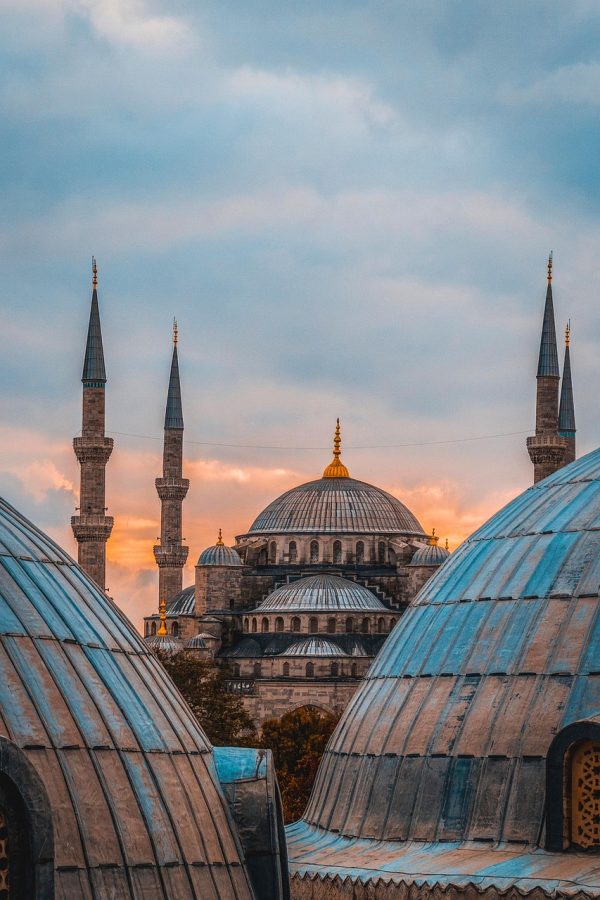
The Blue Mosque, officially known as the Sultan Ahmed Mosque, is one of the most famous landmarks in Istanbul and one of the most memorable places to visit in all of Turkey. With its elegant domes, six slender minarets, vast courtyard, and famously blue-toned interior decoration, it is both a major historical monument and a living place of worship. That combination is exactly what makes it so special: the Blue Mosque is not just a building to admire from outside, but a sacred space that still shapes daily life in the heart of the old city.
For many travelers, a visit to the Blue Mosque becomes one of the highlights of Istanbul. The setting alone is extraordinary. The mosque stands in Sultanahmet, directly opposite Hagia Sophia and close to the Hippodrome, Basilica Cistern, Topkapi Palace, and the Grand Bazaar. In a single short walk, you can move through Roman, Byzantine, and Ottoman history. Yet even in such a rich neighborhood, the Blue Mosque stands out for its harmony, atmosphere, and beauty.
This guide covers everything a visitor really needs to know: why the Blue Mosque is famous, what makes it unique, how much it costs, when to go, how to dress, what to expect inside, practical etiquette, transport options, photography advice, and useful local tips. If you are planning your first visit, or simply want to understand why this mosque continues to impress millions of visitors every year, this is the place to start.
Why Is the Blue Mosque So Famous?
The Blue Mosque is famous for several reasons. First, it is one of the great masterpieces of classical Ottoman architecture. Construction began in 1609 during the reign of Sultan Ahmed I and the mosque was completed in 1616. It was designed by Sedefkar Mehmed Agha, a student of the legendary Ottoman architect Mimar Sinan. The result was a building that combined imperial ambition with spiritual elegance.
Second, the mosque is visually unforgettable. Its cascading domes rise in carefully balanced layers, creating one of the most iconic silhouettes in Istanbul. The six minarets were especially striking at the time of construction and remain one of the features people remember immediately.
Third, the interior gives the mosque its popular name. Although the building is not blue on the outside, the prayer hall is decorated with thousands of İznik tiles in floral and geometric patterns, many in shades of blue, turquoise, and green. Light filtering through the windows and reflecting across the tiles and carpets creates a calm, luminous atmosphere that feels very different from a museum or palace.
Finally, the Blue Mosque is special because it is still active. Visitors are welcome, but the building is primarily a mosque, not just a tourist attraction. That means your visit is also an encounter with living faith and living tradition. It gives the experience depth and authenticity that many historic monuments no longer have.
What Makes the Blue Mosque Special?
There are many beautiful mosques in Istanbul, so what makes this one stand apart?
1. Its location. Few monuments in the world occupy such a dramatic setting. The mosque faces Hagia Sophia across Sultanahmet Square, in the middle of the historic peninsula. You are standing where empires rose, changed, and left their mark on the city.
2. Its interior atmosphere. The Blue Mosque feels grand, but not cold. Unlike some monumental buildings that can seem distant, this one often feels intimate despite its scale. The hanging lamps, carpets, calligraphy, stained glass effects, and tiled decoration create a soft and welcoming space.
3. Its balance of monumentality and grace. The building is huge, but the proportions are so well judged that it never feels heavy. The dome composition is especially elegant, drawing the eye upward in a smooth visual rhythm.
4. The six minarets. This remains one of the mosque’s most famous design elements. In Istanbul’s skyline, the Blue Mosque is instantly recognizable.
5. It is part of a bigger historical experience. Visiting the mosque is never just about one building. The surrounding area includes some of the greatest historical sites in Turkey, which makes the Blue Mosque a perfect anchor for a full day of sightseeing.
Is There an Entrance Fee? Prices and Costs
One of the best things about visiting the Blue Mosque is that entry is free. You do not need to buy a standard admission ticket to enter the mosque as an ordinary visitor.
That said, there are still a few costs you may want to think about when planning your visit:
Donations: Donations are voluntary. Because the mosque is a historic and active religious site, many visitors choose to leave a small contribution to support maintenance and preservation.
Guided tours: Entry may be free, but independent guides and organized walking tours in Sultanahmet are not. Prices vary depending on whether the Blue Mosque is included in a general old city tour or paired with places such as Hagia Sophia, Topkapi Palace, or the Basilica Cistern.
Transport: Your main extra cost will usually be transport. The T1 tram is often the easiest and most economical way to reach Sultanahmet.
Nearby attractions: The Blue Mosque itself is free, but many nearby sights are ticketed. It is common for visitors to combine the mosque with paid attractions, so budget accordingly if you want to turn the area into a half-day or full-day itinerary.
In practical terms, the Blue Mosque is one of the best-value cultural experiences in Istanbul because you can see one of the city’s most famous landmarks without paying an entrance fee.
Opening Hours and Visiting Times
The Blue Mosque is generally open to visitors every day, but there is one very important rule: tourists cannot enter during prayer times. Because this is an active mosque, access pauses several times daily to allow worshippers to pray in peace.
Opening patterns can vary slightly by season and according to prayer schedules, but many visitors use the following rhythm as a practical reference: mornings after opening, a midday visiting window, and a later afternoon visiting window. On Fridays, access for tourists usually begins later than on other days because of the main congregational prayer.
For that reason, the smartest approach is not to think of the Blue Mosque as a place with one fixed museum-style timetable. Think of it instead as a living religious space with visitor windows between prayer sessions.
Good rule: arrive early in the day, avoid the main prayer periods, and allow some flexibility in your schedule.
Best Time to Visit the Blue Mosque
If you want the best possible experience, timing matters a lot.
Best time of day: Early morning is usually the best moment for most travelers. The light is softer, the square feels calmer, and large tour groups may not yet have arrived. Late afternoon can also be a lovely time, especially for warmer tones on the exterior and a more relaxed pace.
Best day of the week: Weekdays are usually more comfortable than weekends. If possible, avoid Friday unless you are specifically interested in the atmosphere of the mosque as an active religious site and are prepared for delayed tourist access.
Best season: Spring and autumn are ideal for many visitors. Istanbul is generally pleasant in these seasons, and walking around Sultanahmet is much more enjoyable than in the hottest part of summer. Summer brings long days and lively city energy, but also bigger crowds. Winter can be atmospheric and much quieter, though weather conditions may be less predictable.
Best overall strategy: Visit shortly after opening on a weekday in spring or autumn, then continue on foot to nearby attractions before the area becomes busiest.
How Long Do You Need for a Visit?
Many people spend 30 to 45 minutes inside and around the Blue Mosque. That is enough time to walk through the courtyard, enter the prayer hall, look up at the dome, notice the tilework and calligraphy, take a few respectful photos, and absorb the atmosphere.
If you enjoy architecture, photography, or slow travel, you may want more time. The exterior deserves attention too. The courtyard, arcades, fountains, and changing views from different angles all add to the experience. Combined with the surrounding square, it can easily become a longer stop.
A practical tip is to budget at least one hour in your itinerary, even if your actual visit inside the mosque is shorter. Queues, security, prayer-time pauses, and time spent in the square can all lengthen the experience.
Dress Code: What Should You Wear?
Because the Blue Mosque is an active place of worship, modest dress is required.
For everyone: shoulders and knees should be covered. Avoid very short skirts, shorts above the knee, sleeveless tops, and clothing that is too tight or revealing.
For women: head covering is required inside. If you do not have a scarf, one is often available at the entrance. It is still more convenient to bring your own.
For men: ordinary modest travel clothing is usually fine, but very short shorts or beachwear are inappropriate.
Shoes: you must remove them before entering the carpeted prayer area. Bags are usually provided so that you can carry your shoes with you.
The easiest approach is to dress with mosque etiquette in mind before you arrive. That saves time and makes the entrance process smoother.
Visitor Etiquette and Practical Rules
Respect matters here. Even though the Blue Mosque is one of Istanbul’s biggest attractions, it is not only a sightseeing stop. It is a sacred place where people come to pray.
Here are the most important practical rules:
Speak quietly. Keep your voice low and your behavior calm.
Do not walk in front of worshippers while they are praying. This is basic mosque etiquette and should always be respected.
Remove your shoes. Follow the instructions at the entrance.
Be patient with access control. At busy times, the number of visitors inside may be managed.
Photography is usually allowed, but be discreet. Avoid flash and never treat the mosque as a casual photo studio.
Do not interrupt prayer. If a prayer period starts, simply step back, wait, and let the space function as intended.
A respectful visitor nearly always has a better experience than a rushed one.
What to Look For Inside
Many visitors enter, look up for a minute, and leave too quickly. The Blue Mosque rewards slower observation. Here are some details worth noticing:
The central dome and semi-domes. The layered structure gives the interior a sense of order and calm power.
The İznik tiles. These decorative tiles are one of the most famous elements of the mosque. Look for floral motifs such as tulips, carnations, roses, and arabesque patterns.
The calligraphy. Arabic inscriptions add rhythm and sacred meaning to the space.
The mihrab and minbar. These architectural elements help define the prayer space and deserve attention even if you are not familiar with Islamic architecture.
The light. Natural light changes the mood of the mosque throughout the day. This is one reason timing can make such a difference to the experience.
The carpeted floor and hanging lamps. Together they create a softer, more human atmosphere than many first-time visitors expect.
How to Get There
The Blue Mosque is in the Sultanahmet district of Istanbul’s historic peninsula, one of the easiest sightseeing areas to explore on foot once you arrive.
By tram: The most convenient option for many travelers is the T1 tram. Get off at Sultanahmet station and walk a few minutes to the mosque.
By metro plus tram: Depending on where you are staying, you may need to combine metro and tram connections to reach the old city efficiently.
By taxi or ride-hailing app: This can be comfortable, especially early in the morning or if you are traveling with family, but traffic in the historic center can be heavy.
On foot: If you are staying in Sultanahmet, Eminönü, Sirkeci, or nearby parts of the old city, walking may be the best option.
Because the surrounding area is so dense with major landmarks, many visitors reach the Blue Mosque as part of a larger walking itinerary rather than as a single standalone stop.
Useful Tips for Visiting the Blue Mosque
Go early. This is the single best tip for a calmer experience.
Bring a scarf or modest layer. Even if coverings are available, your own is more convenient.
Check the day’s prayer rhythm locally. Prayer times change, so flexibility helps.
Pair your visit with nearby landmarks. Hagia Sophia, the Hippodrome, Basilica Cistern, and Topkapi Palace are all close by.
Do not rush the exterior. Some of the best impressions of the mosque come from its courtyard and skyline views.
Carry small cash. It is useful for transport, snacks, donations, or small purchases nearby.
Respect the space even when others do not. Your own experience will be richer if you approach the mosque thoughtfully.
What Is Good About Visiting the Blue Mosque?
Some landmarks are famous but disappointing in person. The Blue Mosque is usually the opposite. What is good about it is not only its beauty, but the quality of the experience.
It is accessible, because entry is free.
It is central, because it sits in the heart of Istanbul’s old city.
It is meaningful, because it remains an active religious space rather than a frozen monument.
It is visually rewarding, both outside and inside.
And it is surrounded by other major attractions, making it easy to build a wonderful day around your visit.
For travelers who want architecture, atmosphere, history, and a sense of living culture all in one place, the Blue Mosque delivers exceptionally well.
Suggested Itinerary Around the Blue Mosque
If you want to make the most of the area, here is a simple plan:
Morning: Arrive at the Blue Mosque shortly after opening. Spend time in the courtyard and inside the prayer hall while the area is still relatively calm.
Late morning: Walk across to Hagia Sophia or continue to the Hippodrome and Basilica Cistern.
Lunch: Eat in Sultanahmet or walk toward Sirkeci for more options.
Afternoon: Visit Topkapi Palace or wander deeper into the historic peninsula.
This sequence works well because the Blue Mosque is a strong emotional and visual start to the day.
Final Thoughts
The Blue Mosque is much more than a famous postcard image of Istanbul. It is one of those rare places that combines world-class architecture with a living spiritual purpose. You can admire its domes from the square, study its historic design, step inside to see the blue İznik tiles, and feel that you are not just observing the past, but entering a place that still matters in the present.
It is also one of the easiest great monuments in Istanbul to visit well. The entrance is free, the location is central, the etiquette is straightforward, and the rewards are immediate. Come dressed respectfully, aim for an early or late visit, leave time for the surroundings, and allow yourself to slow down once you are inside.
If you do that, the Blue Mosque will likely become more than another sightseeing stop. It may become one of the moments from Istanbul that you remember most clearly long after the trip is over.